Showing posts with label Op-Ed Commentaries. Show all posts

Sunday, November 17, 2013

A horrible decision against Jessica Ernst, Landowner, Rosebud, Alberta, Canada

Article by S. Tom Bond, Retired Chemistry Professor and Resident Farmer, Lewis County, WV


Canadian Courts Dismiss Protection for Owners of Polluted Lands & Waters

Alberta, Canada, is a province lying in and east of the Rocky Mountains, north of Montana and up to the 60th parallel. In it lie Edmonton and Calgary, large cities, so that only 19% of the 3.6 million total population live in  rural areas.  It is the home of the fabulously beautiful location, sometimes called Superman Country, where part of the movie Superman was filmed.  It is also the home of vast deposits of hydrocarbons: coal, gas and the famous Athabasca Tar Sands.  Alberta is the largest producer of crude oil, synthetic crude, natural gas and gas products in Canada. Alberta is the world’s second largest exporter of natural gas and the fourth largest producer.
That is the background of our story (and incidentally sheds some light on the Keystone XL pipeline).  The hydrocarbon industry in Alberta is a political power that makes Texas look downright democratic.


Monday, September 23, 2013

Will Fracking Ruin Tourism in West Virginia?

Will West Virginia's widespread horizontal drilling do any damage to the state’s tourism business? The state is known for its wide open spaces, forests and mountains but increased truck traffic on quaint country roads, air pollution, noise pollution, and the decreased availability of motel rooms, campground spaces, and RV parking is bound to have an impact. Few vacationers who want to get away to the country envision  a view of drilling rigs, gravel pits, and compressor stations.

Every year millions of tourists come to West Virginia, many tourists are looking to camp and hunt and fish. The state's hunting grounds are diminishing and fears over lake and stream pollution will certainly keep some people away. The perception of the state as an industrial region instead of a rural paradise will become a reality, especially for visitors who come from regions where fracking has been banned or suspended.

Wednesday, September 11, 2013

My Property Value Plummeted Because Of Nearby Fracking! Can I Sue?

Here in West Virginia, homeowners are lookiung at land being cleared for fracking sites next to their homes that just happen to be for sale. With months of noisy, unsightly work just getting started, how will they ever sell their home? Potential buyers will have heard about the large number of trucks that will soon be clogging the quaint county lanes and they will have heard about people who claim fracking destroys water wells for miles around the fracking sites. Who will buy a home next to a potential health hazard when the home's main selling point, the glorious view of the hills of West Virginia, no longer exists?

Monday, August 26, 2013

Are We Against Fracking? No! We Are Against the "Frack Wherever You Want" Attitude of WV

Are we at Fracking WV against fracking? Suprisingly, no, We are against the negative effects of fracking, such as disruption to our community, such as county roads congested with truck traffic. We are also against the air and water pollution fracking brings.

We do believe that many of these problems could be alleviated with stronger local, state and federal regulation and oversight. In WV, our state and local governments let drillers do whatever they want, without any regard for the impact fracking has on residents. Want to extract shale gas near a school? In WV, it's fine.

Wednesday, August 21, 2013

Unfortunately, Climate Change Denial Continues

Commentary by S. Tom Bond, Retired Chemist & Resident Farmer, Lewis County, WV


In spite of near universal agreement among climate scientists that the earth is warming and the cause is human activity climate warming denial is strong among those influenced by the energy business.

Interestingly, forced winds of change are blowing through Reuters’ environmental coverage. One of its three regional environment correspondents “is no longer with the company” and the other two have been ordered to switch focus, people inside the agency say.


Sunday, August 18, 2013

Looking Past Natural Gas


CHARLESTON, W.Va. — Shale drilling for natural gas is just getting started. If it proceeds anything like the fond hopes of some, hundreds of thousands of acres will be involved, requiring about 30 acres for each well pad and connections. In Appalachia, 100,000 square miles are underlain by the Marcellus, Utica and various Devonian shales now being tapped. Only agriculture and forestry are more land-intensive.

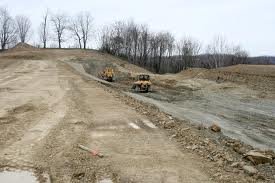
Shale drilling removes from other use the land it utilizes, much the same as other heavy industry, much of it forever. Excavation removes the surface down to the subsoil, then covers it with crushed stone thick enough to support heavy trucks over the drill pad and roads in any weather, with drainage around these. Wide lanes through forest are required for pipeline right of way. Each site becomes a potential brownfield, with contamination by machine operation, chemicals used in drilling and from chemicals that come up from the depths of the earth.

The return on shale drilling investment depends on dicey economics. Like the coal industry before it, and to a lesser degree the old oil and gas industry, many costs are “externalized,” that is, pushed off onto others, largely unrecognized except by those “others.” There is much damage to people and to future productive capacity of the land. A farmer like myself, living in the midst of a deep mining area, a strip-mined area and in the midst of older drilling, is more aware of both what has happened and what is going on. Here are some of the most grievous effects today:

Sunday, June 30, 2013

The Cost That Cannot Raise Its Head (Part 1)


Shale Drilling Commentary by S. Tom Bond, Resident Farmer, Lewis County, WV

There are many arguments for and against shale drilling. It produces a lot of cheap natural gas and oil right now, it helps industries that need cheap energy and feed stocks, it requires lots of inputs (especially steel and diesel for running all those engines) and it provides jobs, but not so many or so well paid as coal.
Due to United States economic policy for the last few decades, there is a lot of capital piled up looking for some place to go. Particularly in foreign tax havens, since tax avoidance is a national preoccupation in the U. S. which is only exceeded by Italy and few other nations. Everybody is looking for a sure thing, quick. If you read the investment newsletters, shale drilling looks like IT.
So shale drilling has garnered some lovely advantages for itself, some by being part of the petroleum industry and fossil fuel business, and some unique to shale drilling itself.
But the accounting used to evaluate the industry can see only in one direction. This is because energy supports our much loved but wasteful relationship with personal transportation, much of it in oversize vehicles, and with our much loved but scandalous desire to dominate the rest of the world with our war machines. It is needed for industries such as steel, glass, concrete, and for our development of huge over-centralized supply networks for almost all goods, requiring huge amounts of long distance transportation, rather then local supply networks. We need too much heating energy because we build without proper insulation and do not utilize the waste heat from electrical generation and a host of other industrial processes.

Thursday, June 6, 2013

Removal of Fresh Water From Common Usage is a Looming Threat

Letter to the Editor by Larry Harris, Morgantown Dominion Post


I read with interest the article on injection wells (Dominion Post – Sunday, May 19th) used for storage of spent fracking water. I had no idea that there were 65 of these wells in the state, as well as one so close to Morgantown as the one featured on Snake Hill Road (in Monongalia County).

The underground injection of fracking water, with toxic chemicals and radioactivity, is apparently the only solution for the drillers, as cleaning the water is too expensive. Underground injection, the article points out, has been challenged by “fracking watchdogs” because of the danger of contamination of water tables and causing earthquakes.

There are other concerns related to this process other than those two, namely, spills at the site or during transportation to the injection well. Pump failures might also be a problem. But the most serious issue, in my mind, is the removal of water from the water cycle.

Saturday, May 25, 2013

How to Energize the State of West Virginia?

Natural Gas Flame

Commentary by S. Tom Bond, Resident Farmer, Jane Lew, Lewis County, WV America’s Natural Gas Alliance and Energize WV with Natural Gas held another of its Town Hall information meetings in Buckhannon Wednesday evening, May 22. The presentation and room decoration were similar to a one I attended at Bridgeport a year or so ago, perhaps a little less elaborate. There was a talk by a good female speaker emphasizing the points the industry wishes the audience to accept: economic effect, fracking is not new technology, everything is done to avoid water contamination, they are thoroughly regulated by the Department of Environmental Protection, gas is the coming thing, and basically no one is harmed. Then a well prepared video give much the same points with pictures and (very few) graphics. The visual displays around the room were much more limited than the previous meeting I attended. But the obligatory sweet food bar was present.